Monday, July 12, 2010

Brief History of Star of Doom

Star of Doom is an idea. It is a concept. It is a universe.
A lot of Star of Doom can summed up in the following extremely annoying song:


Anyone who played the second iteration of Star of Doom knows it well. But what is Star of Doom. It is a planned game. One that was never completed. It has gone through many iterations, yet always been too ambitious to survive. Star of Doom is my goal. Actually, the truth is that it was originally called Legend of the Fire Star. Star of Doom just sounded better.

First Iteration

Back when I was in sixth grade (2006), I had just failed at my fist attempt at creating a game when I first conceived Star of Doom. I began by planning out the characters and settings, imagining a whole galaxy filled with planers and stars, and nebulae and all kinds of alien life forms with rich histories and backgrounds. It was months later that I naively tried to actually make this a reality. After almost a month of coding using my own custom built DirectDraw game engine, the Cow Moostache 2D game engine, I had accomplished very little. I had a menu, a first cut-scene, and the beginning of a first area. At this point, my artist, Nick Safford, had to leave the project. Stranded, and not making much progress, I decided to abandon it for the time being. Failure Excuse: Lack of Experience.


Second Iteration

The second iteration was the first 3D attempt at Star of Doom created using the Irrlicht3D engine. It was also not only the most popular among my friends, but also the farthest of any attempt. I started this attempt towards the end of 6th grade, I believe. This attempt featured a full fledged RPG system with items, conversations, a pause menu, and so on. Well, you might ask what stopped me from finishing. Well... After a while, I begin to have massive code organization problems. It was simply too much to work with. My application started to break down bit by bit, and I was unable to isolate any of the causes of the problems. Failure Excuse: Lack of Organization


Third Iteration

I started this version around 7th grade The third iteration was similar to the second, but far more graphically intensive. This was due mainly to a switch over to the Ogre3D engine. I now had access to shaders, post processing, shadows, and much more. I could even have day and night cycles. It was during this iteration that I started a blog for the project: http://starofdoom.blogspot.com/. I began to work on more advanced effects such as water, terrain, and much more. This iteration somehow just dissipated, and I'm not even sure why. It was more of a lack of motivation, due to school, and homework and stuff. Failure Excuse: Lack of Motivation / Too Much Stress


Fourth Iteration

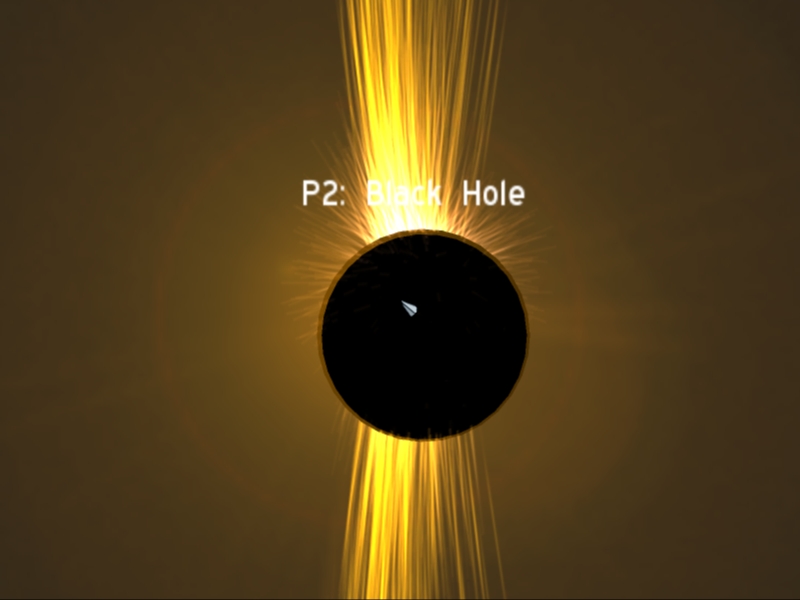
The fourth and most recent Iteration was spawned out of a desire to fully realize the dream of Star of Doom. Imagine if you could explore spherical planets in a dynamic universe, and travel to other planets and back, without any seams. Yeah. That would be awesome right. The video below shows as far as I got. Remember to watch the entire thing, otherwise the sense of scale doesn't hit you. In the video, I fly off the planet, and hyperdrive away to the black hole. I screw around there for a while, then turn back to face the planet. You see the planet as a tiny little speck orbiting its star. Even the star is not static. It orbits the black hole at massive speeds. Failure Excuse: Overly Ambitious.


Saturday, July 10, 2010

Effects Videos

I was bored, so I decided to put together a compilation of random fx stuff that I've done in the past.


Saturday, July 3, 2010

Website!

I recently registered a domain for myself: varunramesh.net.

There's currently nothing there, so typing it in wont do anything. I did, however, set up a page for my science project: http://varunramesh.net/portfolio/right/ScienceProject2010/index.html. It includes a description, a video, a list of awards won, and downloads for the report and the source code.

Also, http://varunramesh.net/blog just redirects here

Wednesday, June 30, 2010

My House Is Like an I SPY Book

Let's play I SPY!

THE DESK

I spy a Pokemon Soul Silver DS game,
As well as a book on Robert Burn's fame.
I can also see an HTC MyTouch 3G,
Opposite to an Intel Laser Pointer Box that I got for free.
I spy a Bogle Junior High notebook,
and a Windows dialog that popped up while browsing Facebook.


THE PIANO


I spy a $400 carbon fiber bow,
Collecting dust on a wood floor.
I spy an amp for an electric guitar,
and an electric tuner that isn't too far.

BENEATH THE TV

I spy a Nintendo Wii,
Next to a game containing Metroid Prime 3.
I can see Harry Potter and the Goblet of Fire,
But I can't tell which is the sensor bar wire.
But in order to test your true "I SPY" finesse,
Can you tell me which GBA game is in my DS.


Wow. I need to clean this mess up...

Monday, June 28, 2010

Certamen (Python-Ogre Test)

Last week, I made this random game to test out the latest version of python-ogre. It's a tower defense style game, where the goal is to destroy the water elemental.

Binary: http://www.mediafire.com/?dtlkyymnn2m

Source: http://www.mediafire.com/?jnynnnmdm1y
(Needs Python 2.6 and python-ogre)

6 stages and a tutorial

2 possible unit types to build

The game can get complex really fast

The inspiration for this game came from the UFEC entry Lord of the Elementals.

Sunday, April 11, 2010

One Language. Multiple Platforms. Awesome.

Whilst wandering through the bowels of the vast jungle of the internet, I stumbled across something cool. It is called haXe. haXe is yet another programming language (you'd think we have enough of those), but there is one small thing that sets haXe apart from anything else that I've seen. The website claims that haXe is a multi-platform language. Let me explain what they mean by that.


Here's the magic of haXe. The haXe compiler (written in OCaml) actually has various back ends. Each of these back ends is able to translate any standard haXe program into another language where it can be compiled. This means that almost any haXe program that you write can not only target a browser, but be embedded as a .swf, run server side, or even compile to native C++ code. That's crazy. Because haXe is Object Oriented, you can use full object oriented features, and standard class definitions to create oo programs in languages with nonstandard oo features.

haXe has already been used for iPhone development, and a Java back end ins in production for writing Android apps. Man, I can't wait.

Actually, through use of the neash library, you can use a standard graphics library for th iPhone, desktop, and flash. Now that is even more crazy. If you are interested in multi platform application development, then haXe is definitely something to check out.

Now, you might respond: "Who cares?".
The answer: mobile and web application developers.

The problem that has plagued many developers for years is deployment. They want the maximum people possible to be able to use their product. The wanted a single unified way to create applications inside web browsers. They could attempt to embed a native application, but there is a problem. Any native application will have to be recompiled for every platform that it will be distributed on. This is a hassle, especially if you cannot anticipate the computers of your users. For this reason, various platforms were developed including JavaScript, flash, Java, and various other solutions.

But the problem is still relevant today. Suppose you are a mobile game developer. You want to develop a game for a bunch of platforms. You want to be able to reach iPhone users, Android users, Blackberry users, enV users, Window Mobile users, etc. Normally, this would require you to learn Objective-C, Java, C++, as well as learn the SDK's for each device. Now, however, there is an easy solution.

Meet the Airplay SDK
http://www.airplaysdk.com/


Airplay allows developers to use a single unified application SDK to develop their applications. Then using a single click, application can be deployed to numerous platforms. This saves time, work, and effort, and greatly increases your target audience size.

Saturday, March 20, 2010

Valve and Level Design

The designers at Valve are the supreme rulers of the realm of level design. Virtually every single game that Valve makes boasts superior artistry and craftiness. They truly are masters of their art.

My question is: "How on Earth do they do it?"

Turns out Valve is awesome enough to tell us.

Just check out the Valve Level Design Wiki for Source Mods: http://developer.valvesoftware.com/wiki/Half-Life_2_Level_Creation. It's a priceless resource. Did I mention Valve is awesome!

http://developer.valvesoftware.com/wiki/Single-Player_Mapping_Tips
Single player mapping tips! That's gold!

http://developer.valvesoftware.com/wiki/Bounce_(level_design)
http://developer.valvesoftware.com/wiki/Adding_More_Detail_to_a_map
http://developer.valvesoftware.com/wiki/Loops_(level_design)
http://developer.valvesoftware.com/wiki/Push_Gameplay

All stuff that is definitely worth taking into consideration when creating a map.